
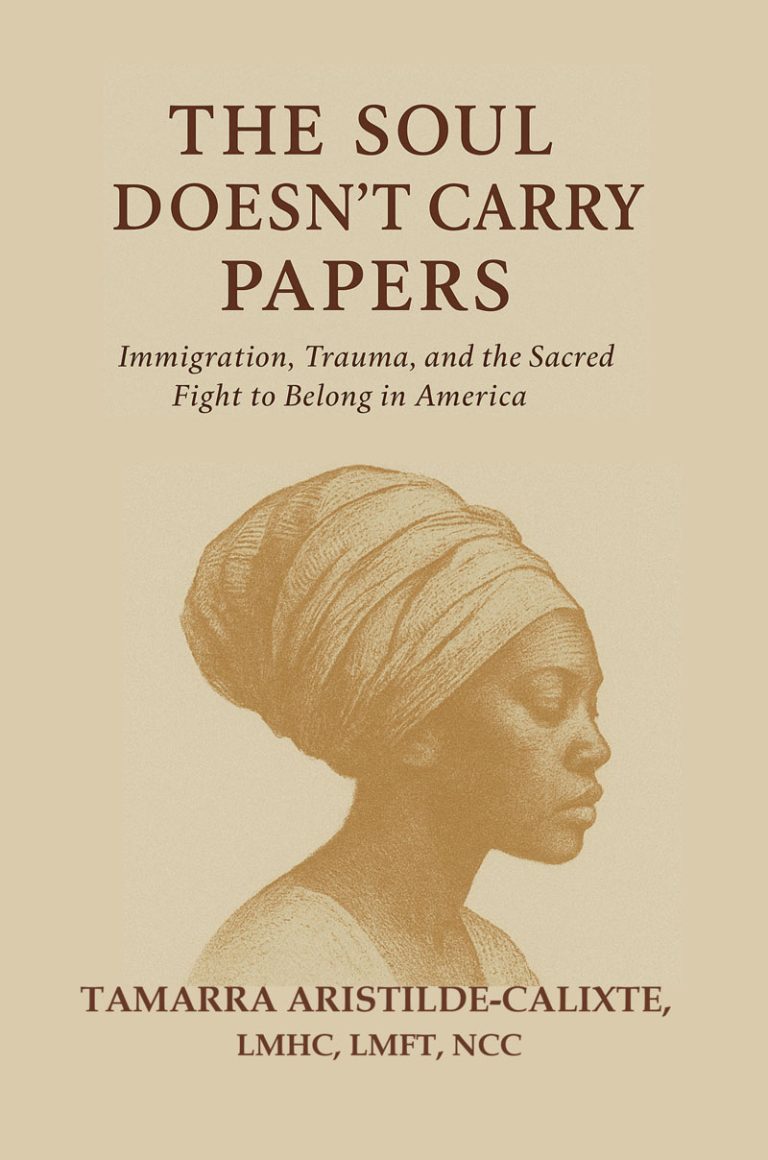
Healing Beyond Borders: A Journey Through Immigration, Trauma, and Belonging
Tamarra Aristilde-Calixte’s new book, The Soul Doesn’t Carry Papers: Immigration, Trauma, and the Sacred Fight to Belong in America, dives deep into the emotional and spiritual struggles immigrants face. Tamarra, an accomplished mental health counselor, doesn’t shy away from exposing how immigration affects every aspect of life—body, mind, and soul. Her perspective is raw, authentic, and deeply rooted in her personal journey and clinical experience.
Layers of Invisible Grief
Tamarra opens the conversation on grief in a refreshingly honest way. Grief, she explains, is multi-layered for immigrants: anticipatory, personal, ancestral. Immigrants constantly grapple with loss—of homeland, identity, safety—and live on high alert. News cycles, often overlooked triggers, can profoundly reignite trauma. Tamarra highlights how subtle societal cues can stir emotional upheaval long after physical safety is secured. This nuanced exploration makes readers reconsider their interactions with immigrant communities and encourages deeper empathy.
She addresses the fragile illusion of security, emphasizing that legal status doesn’t always provide emotional safety. Often, immigrants still experience conditional tolerance, a tenuous space between acceptance and rejection. Tamarra sheds light on how bureaucratic systems perpetuate instability, leaving immigrants in constant limbo. It’s a powerful reminder that true belonging isn’t simply a matter of legal papers, but an acceptance of inherent dignity and humanity.
Cultural Rebuilding and Spiritual Resilience
One of Tamarra’s strengths is her gentle but clear illustration of how immigrants rebuild their culture in exile. Food, language, rituals—these everyday actions become profound acts of resistance and affirmation. Through these rituals, identity remains anchored, resilient against the tides of cultural erasure. Tamarra captures the quiet bravery in preserving traditions that bind communities together.
Faith and spirituality also play a central role in this resilience, yet Tamarra reveals the pain that arises when trusted institutions fail their immigrant congregants. Spiritual sadness, she says, becomes an opportunity for profound reclamation and new forms of connecting to the sacred. She eloquently narrates how communities rediscover their strength through mutual support and ancestral wisdom—reminding us all of the transformative power of collective healing.

The Invisible Burdens of Care
As a therapist, Tamarra brings special attention to the overlooked emotional burdens of immigrant caregivers. Often, those who offer support to others are themselves struggling quietly with trauma. The role of immigrant therapists is uniquely challenging; they navigate their emotional landscapes while holding space for their clients’ pains. Tamarra describes this delicate balancing act with poignant authenticity, encouraging a deeper appreciation for those who heal.
She also addresses how poverty and hardship are intentionally structured barriers, not accidental outcomes. Immigrants face systemic hurdles deliberately designed to keep them marginalized, despite their contributions and resilience. Tamarra critically examines how immigration laws dehumanize individuals, reducing them to mere paperwork, stripping away their inherent worth. Her candid insights force readers to confront uncomfortable truths about society’s complicity in sustaining these oppressive structures.
Healing Trauma Through Community
One of the most inspiring aspects Tamarra brings forward is the profound strength found in community healing. Mutual aid, shared joy, and ancestral practices become everyday acts of defiance against institutional neglect. Tamarra advocates for culturally sensitive healing, recognizing the body’s somatic memory of trauma. Chronic stress, she explains, needs addressing beyond traditional therapy methods—culturally relevant healing rituals provide deep, lasting relief.
Through vivid storytelling and compassionate reflections, Tamarra’s writing invites readers to see community not just as support, but as essential medicine. Her work is a hopeful reminder that healing thrives in connection, joy, and collective action.
Tamarra Aristilde-Calixte: A Champion for Healing
Tamarra Aristilde-Calixte isn’t only an author; she’s a mental health advocate passionately committed to emotional wellness and resilience. Her prior work, Rising Beyond Barriers, empowers immigrants in healthcare to overcome systemic challenges and build fulfilling careers. She consistently promotes mindfulness, coping strategies, and emotional intelligence through her role at TAC Healing Rise and numerous speaking engagements.
Her books extend beyond storytelling—they provide practical guidance on stress management and emotional learning, especially tailored for younger readers. Tamarra’s dedication to healthcare diversity and accessible behavioral health resources shapes her advocacy, making her a transformative force in mental health education.
Ultimately, The Soul Doesn’t Carry Papers reaches far beyond immigrant audiences. It’s a powerful call to all who have ever felt they don’t fully belong, a guiding light for allies seeking understanding, and a soulful affirmation of inherent worth. Tamarra Aristilde-Calixte beautifully demonstrates how healing, belonging, and joy are possible—even amidst struggle—because the soul’s true value transcends papers, borders, or narratives of fear.
We had the privilege of interviewing Tamarra Aristilde-Calixte. Here are excerpts from the interview.
Hi Tamarra, what inspired you to write The Soul Doesn’t Carry Papers™?
Hello, this book was born from both my personal journey as a Haitian immigrant and my professional work as a licensed mental health counselor and marriage & family therapist. I saw the emotional, political, and spiritual complexity of the immigrant experience—stories rarely told in a way that centers healing. I wanted to weave clinical insight, cultural narratives, and lived experience into a guide for belonging and resistance through compassion.
What does the title mean?
“The Soul Doesn’t Carry Papers” is a metaphor for the truth that our humanity, worth, and belonging are not defined by legal status or political borders. While governments require documentation, the soul itself transcends those limits. The title challenges readers to see immigrants not as categories, but as full human beings.
Who is this book for?
It’s for anyone who:
– Has experienced immigration firsthand or through family
– Works in mental health, social work, or community advocacy
– Wants to understand the trauma of displacement and systemic injustice
– Believes in healing as a form of activism
While it speaks directly to immigrant and diaspora communities, it offers tools and reflections for anyone committed to equity, empathy, and cultural humility.
How is this book different from other books about immigration?
Many books focus on policy, statistics, or political debate. The Soul Doesn’t Carry Papers™ blends personal storytelling, clinical expertise, and culturally grounded healing practices. It’s both a mirror for those who’ve lived this reality and a window for those seeking to understand it—while also being a practical guide for professionals and allies.
What themes do you explore in the book?
– Immigration trauma and generational resilience
– The intersection of identity, race, and belonging
– Systemic barriers to mental health and safety
– Healing through community, spirituality, and cultural heritage
– Quiet resistance through self-care and advocacy
– The role of therapists in immigrant mental health care
What do you hope readers will take away?
That healing is possible—even when systems are unjust—and that connection, culture, and community can be powerful forces for change. I want readers to leave feeling validated, informed, and inspired to engage in compassionate, equity-centered action.
Does the book include practical tools or is it just narrative?
It’s both. Alongside stories and reflections, readers will find:
– Guided Soulwork prompts for personal or group reflection
– A Healing Appendix with culturally sensitive strategies
– Mini meditation scripts for grounding and resilience
How can professionals use this book?
Therapists, counselors, and educators can use it as a training supplement for understanding immigrant trauma, as a book club text for professional development, or as a resource for community discussion circles. The prompts and healing tools are ready-made for workshops or group work.
What was the most challenging part of writing it?
Balancing vulnerability with professional perspective. I wanted to honor my own story while holding space for the many stories that aren’t mine to tell—but that echo in the experiences of the people I serve.
Where can people get the book?
It’s available through TAC Healing Rise™, Amazon, and select independent bookstores. Bulk orders for organizations, trainings, and community groups are also available directly through my website.
Quotes That Linger from The Soul Doesn’t Carry Papers™
“Belonging is not a gift someone else gives you—it is a truth you carry, regardless of who tries to deny it.”
“The soul doesn’t carry papers; it carries the weight of memory, the fire of survival, and the hope of home.”
“Healing is not forgetting; it is remembering with power instead of pain.”
“Immigration is not just a border crossed—it is a lifetime of negotiating identity, safety, and worth.”
“Quiet resistance is choosing to care for yourself in a world that tells you you’re unworthy.”
“To lead with cultural humility is to see the humanity in every face, even when systems cannot.”
Thank you so much, Tamarra, for giving us your precious time! We wish you all the best for your journey ahead!
Get your story featured on Betterauds.com! You can submit your article here